



Blog
Genunine Leather Vs Faus Leather Chair Which Should You Buy

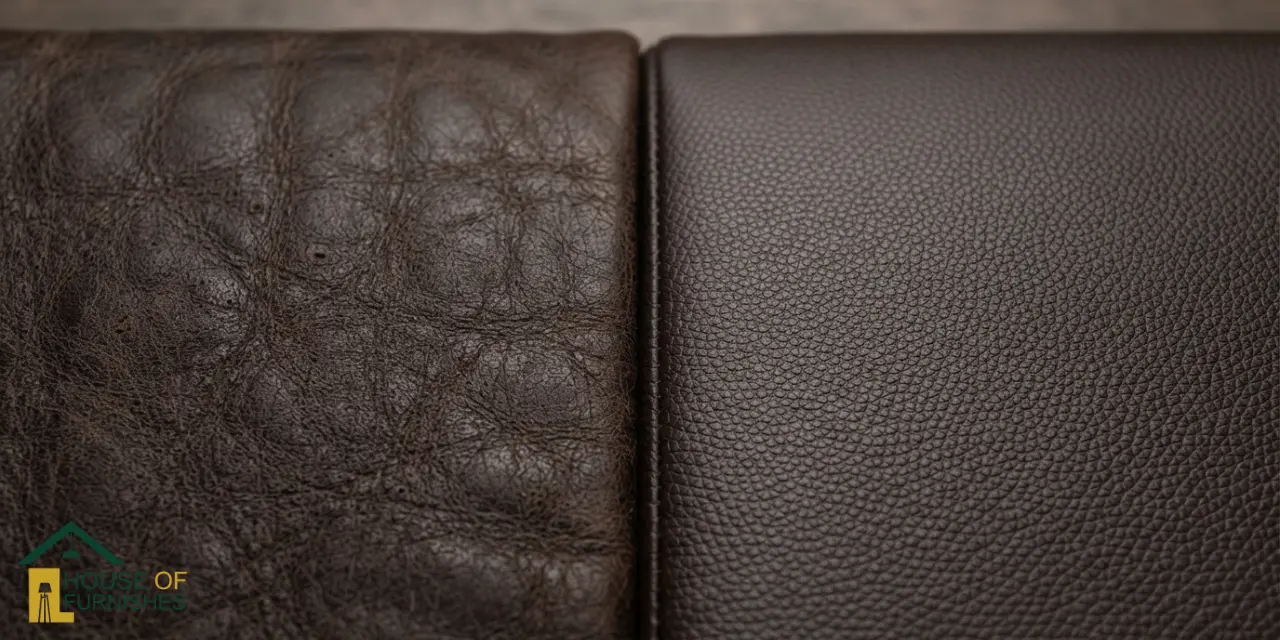
The genuine leather vs faux leather chair question decides whether your chair still looks good in ten years — or cracks and peels in two. Short version: genuine top-grain leather softens and improves with age; faux (PU) leather degrades and flakes. But faux has its place, and telling them apart on a listing is a real skill. As a UK furniture store, here’s the honest breakdown so you know exactly what you’re paying for.
The Core Difference
- Genuine leather — real animal hide. It’s skin: porous, breathable, and it develops a patina, getting softer and more characterful over years. Top-grain is the quality standard for chairs
- Faux (PU) leather — a plastic coating on a fabric backing, embossed to look like grain. It’s cheaper, uniform, and vegan — but it can’t breathe, doesn’t patina, and eventually cracks and peels where it flexes most
The science is well documented — Leather Naturally explains why real hide ages the way it does, and why plastic imitations can’t replicate it.
How to Tell Them Apart (5 Quick Tests)
- Smell. Genuine leather smells like leather; PU smells like a new shower curtain or faintly chemical
- Press test. Push a finger in — real leather wrinkles softly and recovers slowly; PU dents like a yoga mat or springs back with a plasticky sheen
- Grain. Real leather has irregular, natural grain; PU repeats the same embossed pattern uniformly
- Edges and pores. Real leather shows tiny natural pores and slightly rough cut edges; PU has a perfectly smooth fabric backing visible at seams
- Temperature. Real leather warms to your touch; PU stays cooler and slicker
Which Lasts Longer?
No contest for chairs in daily use: genuine top-grain lasts 10–20 years and improves, while PU on contact surfaces typically cracks within 2–4 years where you sit and lean. The flex points — seat front, armrests, headrest — are where PU fails first. This is why quality lounge and office chairs use real leather where your body actually touches. Our classic walnut and brown leather lounge chair uses genuine leather on every contact surface for exactly this reason.
When Is Faux Leather Acceptable?
Faux isn’t always the enemy. It’s a reasonable choice when:
- You specifically want a vegan product
- It’s used on hidden, non-contact surfaces (like the rear backing of a shell) as a sensible cost-saver
- The chair is for light or occasional use rather than daily sitting
The problem is only when PU is used on the surfaces you touch daily and sold as “premium leather.” That’s where buyers get burned.
The Listing Trap to Watch For
Watch for weasel words: “leather match,” “leather air,” “bonded leather” and “PU leather” all mean mostly-plastic. The honest phrase you want is “top-grain leather on all contact surfaces.” If a listing just says “premium leather” with no per-surface detail, ask — and if they can’t answer clearly, assume the worst. This is part of the same quality inspection that separates good replicas from bad ones across our Eames lounge chair collection and office chair range.
Caring for Each
- Genuine leather: weekly dry wipe, monthly gentle clean, condition twice a year — and it rewards you by ageing beautifully
- Faux leather: wipe clean with a damp cloth; conditioning does nothing (no pores to feed), and once it cracks there’s no repair
FAQs
Is genuine leather always better than faux?
For chairs in daily use, yes — it lasts far longer and improves with age. Faux only makes sense for vegan buyers, hidden surfaces, or light-use furniture.
How can I tell real leather in an online listing?
Look for “top-grain leather on all contact surfaces.” Avoid “leather match,” “leather air,” “bonded” or “PU.” If it just says “premium leather,” ask for a per-surface breakdown.
Does faux leather crack quickly?
On daily-use contact surfaces, usually within 2–4 years at the flex points — seat front, armrests and headrest. That’s its main weakness versus real hide.
Final Thoughts
The genuine leather vs faux leather chair decision comes down to how long you want the chair to look good: real top-grain for a decade-plus of improving patina, faux only for vegan needs, hidden surfaces or light use. Insist on “top-grain on all contact surfaces” and you’ll never be caught out. Every chair in our Eames lounge chair collection states exactly what leather covers what — because that’s the detail that decides everything.